Why Reliable Communication Matters Off-Grid
When you leave cell service behind, communication becomes more than convenience—it becomes a critical part of your safety system. Whether you’re traveling solo, running a multi-vehicle convoy, or setting up a remote basecamp, dependable radio communication ensures you can coordinate, navigate, and respond when things don’t go as planned.
For serious overlanders, radios aren’t optional gear—they’re essential.
GMRS Radios: The Overland Standard
General Mobile Radio Service (GMRS) has quickly become the go-to communication solution for overlanding in the U.S.—and for good reason.
Key Advantages of GMRS for Overlanding:
- Extended Range: More power than FRS radios, allowing communication over several miles depending on terrain
- Vehicle-to-Vehicle Clarity: Ideal for trail communication, spotting, and convoy coordination
- Repeaters: Access to GMRS repeater networks can dramatically extend your range
- Simple Licensing: One affordable FCC license covers your entire family
GMRS radios strike the perfect balance between ease of use and performance—making them ideal for both beginners and experienced off-roaders.
GMRS with GPS: Next-Level Situational Awareness
Modern GMRS radios equipped with built-in GPS functionality take communication to the next level.
Why GPS-Enabled Radios Matter:
- Real-Time Location Sharing: See where other members of your group are, even in dense terrain
- Emergency Position Broadcasting: Quickly share your exact location if something goes wrong
- Navigation Support: Coordinate routes and regroup points without relying on cell service
- Enhanced Safety for Solo Travelers: Adds an extra layer of security when you’re exploring alone
For overlanders pushing deeper into remote terrain, GPS-enabled radios provide a major advantage in both coordination and emergency response.
Emergency Preparedness: Plan for the Unexpected
No matter how well-built your rig is, things can go wrong. Communication plays a critical role in how effectively you can respond.
Essential Emergency Communication Practices:
- Designate a Channel: Always establish a primary and backup channel before hitting the trail
- Carry a Handheld Backup: Even if you run a vehicle-mounted radio, a handheld unit is essential
- Know Your Range Limits: Terrain affects signal—don’t assume you’re always connected
- Preload Emergency Contacts: Be ready to reach local repeaters or emergency services if needed
- Practice Communication Protocols: Clear, concise communication can save time when it matters most
Building a Reliable Communication Setup
A well-rounded overland communication system often includes:
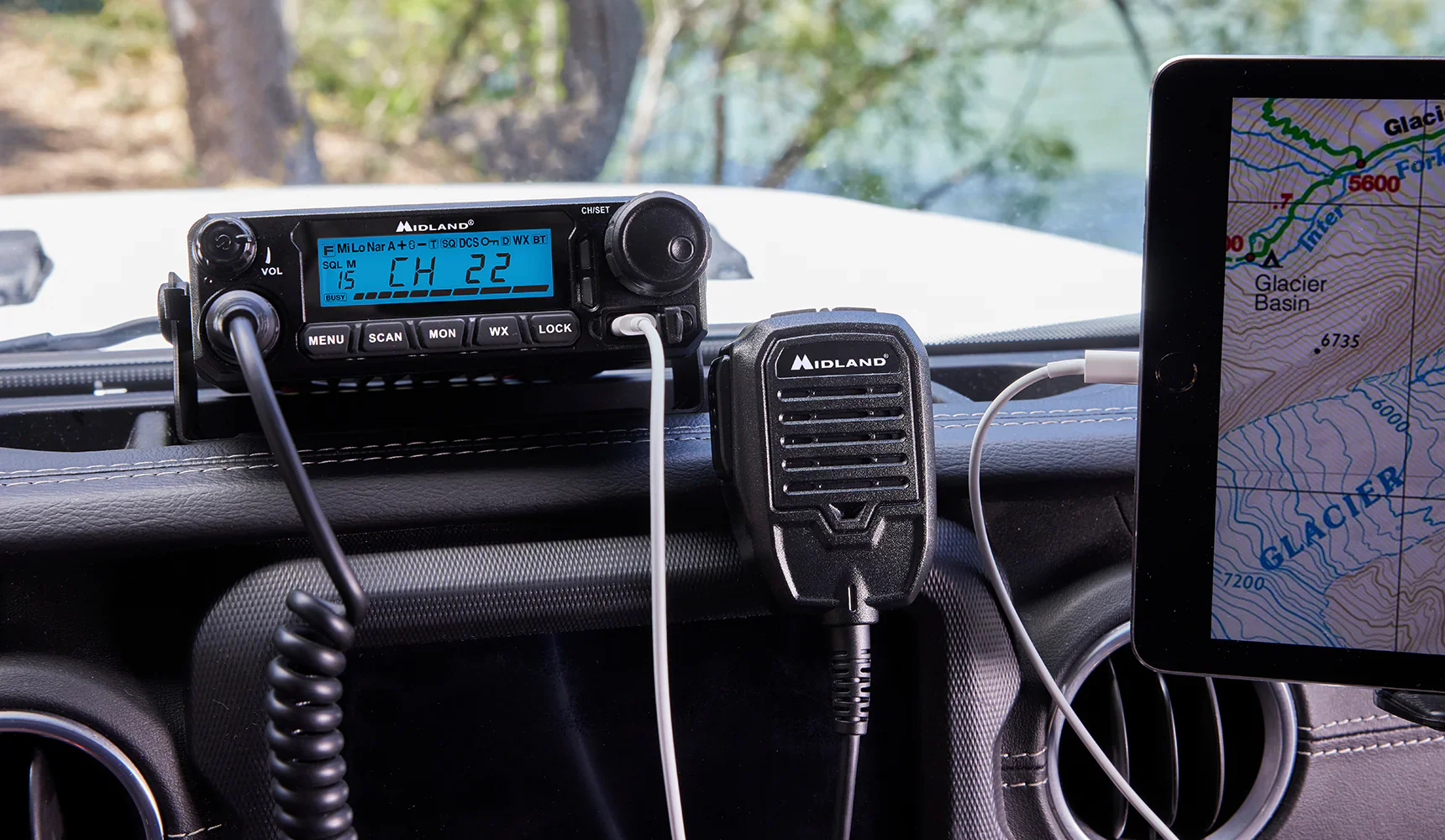
- Mobile GMRS Radio (Vehicle-Mounted) for maximum range and power
- Handheld GMRS Radio for spotting, hiking, or backup
- External Antenna to improve signal strength and clarity
- GPS-Enabled Unit for location tracking and coordination
- Power Management System to ensure consistent operation off-grid
This setup ensures you stay connected whether you’re behind the wheel, outside the vehicle, or navigating challenging terrain.
Real-World Use Cases on the Trail
Overlanders rely on radios for more than just casual conversation:
- Spotting Through Obstacles: Clear instructions when navigating technical terrain
- Convoy Management: Keeping groups tight and informed across long distances
- Trail Hazards: Warning others about obstacles, washouts, or wildlife
- Camp Coordination: Managing arrivals, departures, and logistics
- Emergency Response: Calling for help or coordinating recovery efforts
Final Thoughts: Communication is Capability
In the world of overlanding, capability isn’t just about suspension, tires, or horsepower—it’s about preparation. A reliable radio communication system, especially one built around GMRS with GPS functionality, is one of the most practical upgrades you can make to your vehicle.
It keeps your group connected, your routes coordinated, and your emergency response ready when it matters most.
Out there, communication isn’t optional—it’s essential.